
Awareness first
Self-defense begins before physical contact
For children, some of the most valuable safety lessons happen before a confrontation. Students can learn to notice unfamiliar situations, unsafe distance, unwanted contact, changes in another person's behavior, available exits, and nearby trusted adults.
The objective is not to make children fearful or suspicious. It is to help them recognize when a situation deserves attention so they can speak up, move away, or ask for help earlier.
Practiced boundaries
Confidence becomes something a child can do
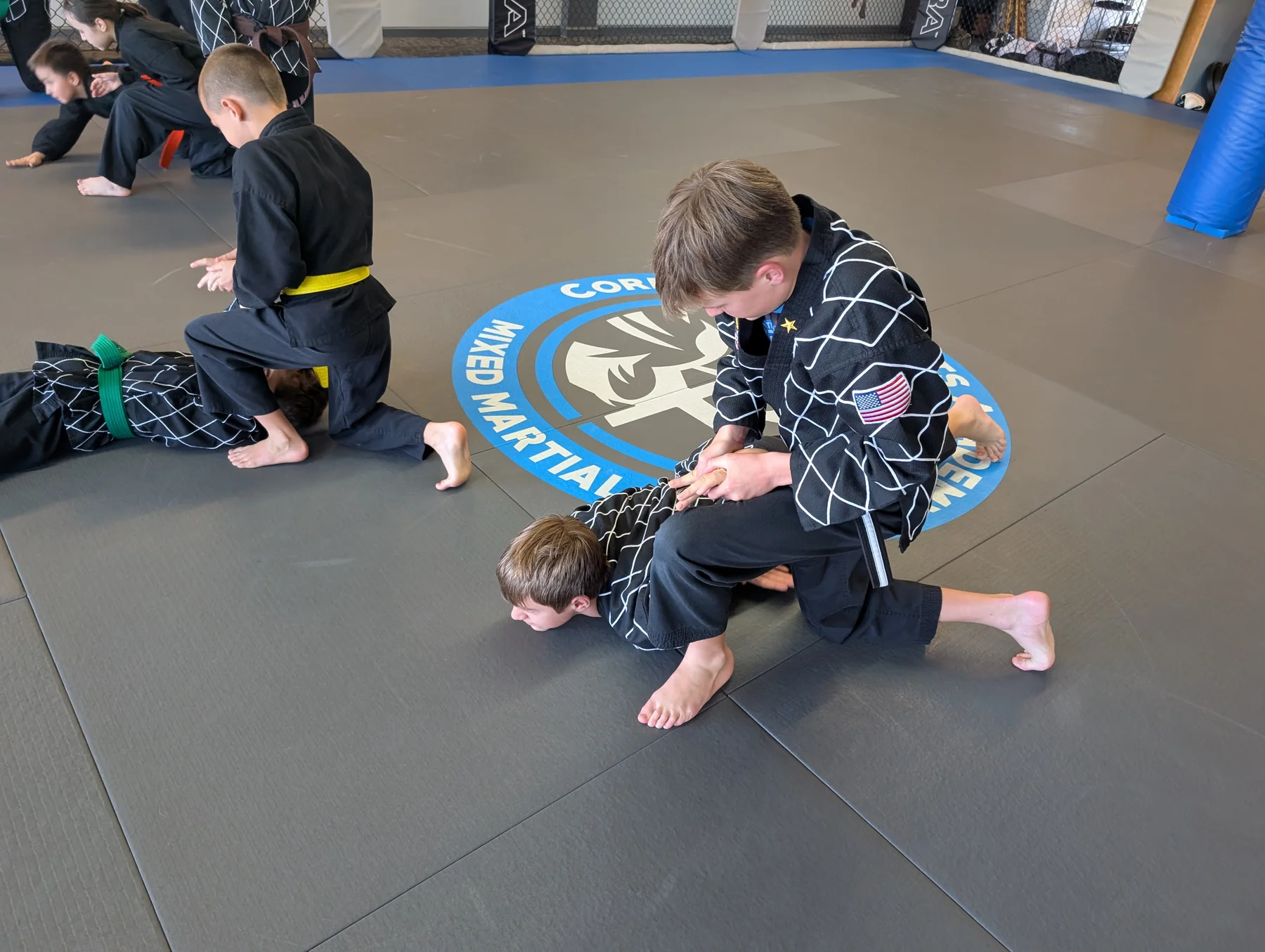
Telling a child to "be confident" is different from letting that child practice confident behavior. In a structured martial-arts class, children can rehearse balanced posture, a clear voice, creating distance, moving toward safety, and telling a trusted adult what happened.
Those exercises turn an abstract safety lesson into a response the child has actually practiced.
Earned progress
Useful confidence grows through preparation
Children build genuine confidence when they attempt something difficult, receive coaching, correct mistakes, and see evidence of improvement. Partner drills and progressive challenges give students repeated opportunities to work through frustration while maintaining control.
This process teaches that confidence is not pretending nothing is difficult. It comes from preparation, patience, and experience.
Knowing a physical skill does not give a student permission to misuse it.
Control, respect, and responsible decision-making come first.
Responsible training
Children learn the difference between defense and aggression
Good youth self-defense instruction does not encourage children to fight over insults, disagreements, or ordinary conflict. Students need to understand the difference between assertiveness and aggression, defending themselves and retaliating, and creating safety versus trying to "win."
At Core, students train in a focused environment where progress is earned and responsible use of skill is expected.
Beyond personal safety
Training develops focus and coordination, too
Parents may first explore martial arts because of safety or confidence, but structured practice can also develop listening, balance, body awareness, hand-eye coordination, controlled movement, partner cooperation, patience, and appropriate responses to coaching.
Training by age
What should self-defense look like as children grow?
Personal safety and strong foundations
Younger students need age-appropriate lessons in listening, coordination, awareness, personal boundaries, using a strong voice, and finding a trusted adult.
Explore Kid Ninjas →Practical skills and partner training
Growing students can work with more detailed situations, including defensive movement, striking fundamentals, escapes, awareness, decision-making, and controlled partner practice.
Explore Junior Self-Defense →Placement matched to maturity and goals
Older youth are guided toward the right Core program based on maturity, experience, personal-safety goals, comfort with partner work, and current ability.
Ask about teen placement →For parents
How to choose a kids' self-defense school
Before enrolling your child, ask whether instruction is age-appropriate, beginners are introduced gradually, partner work is supervised, and the school teaches awareness and avoidance alongside physical skills.
Observe the culture as well. A good academy should be structured and challenging without relying on fear, humiliation, or uncontrolled aggression.